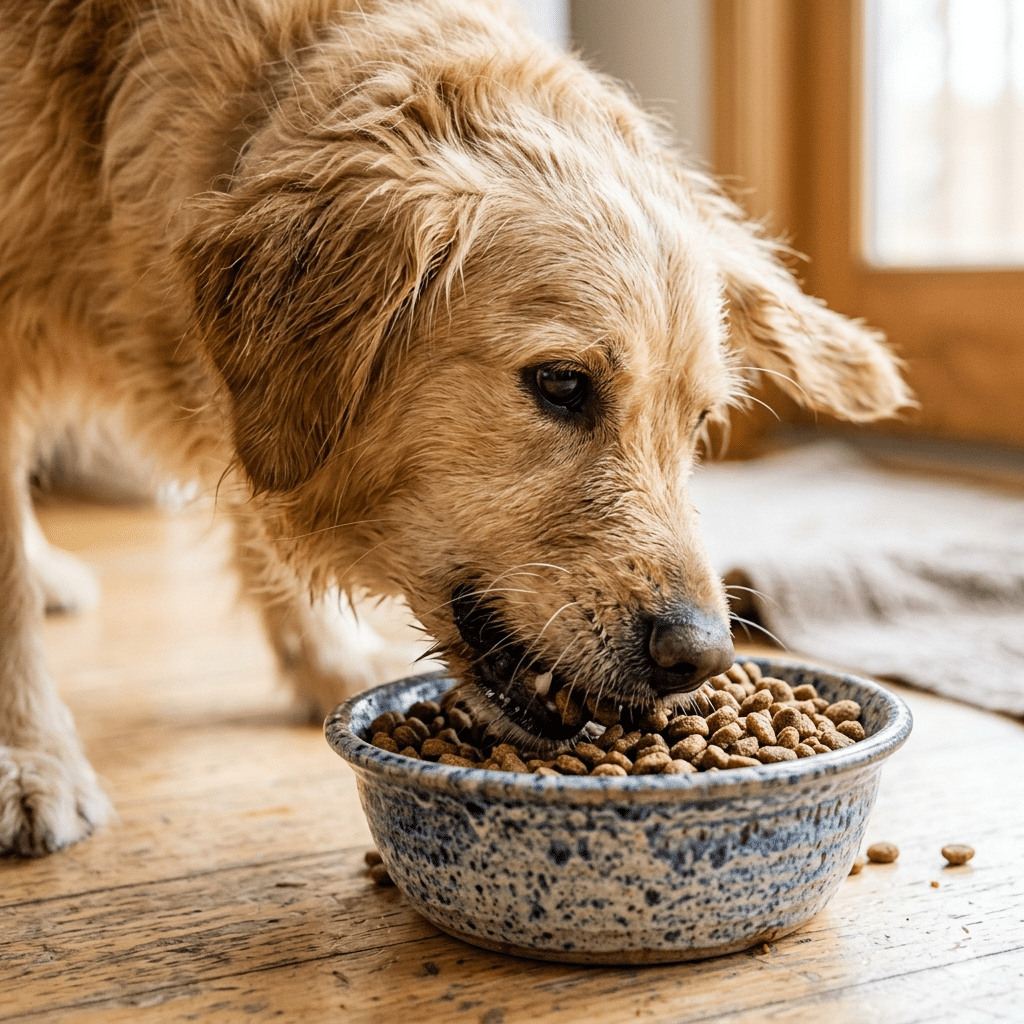
In the world of modern pet care, we often treat nutrition like a checklist. We look at the back of a bag of kibble, see a list of percentages, and assume that if the crude protein is high, the dog is well-nourished. However, the true measure of a dog’s diet isn’t what goes into the bowl—it’s what actually makes it across the intestinal wall and into the bloodstream. This is the science of bioavailability.
For a dog, bioavailability is the difference between a nutrient being “present” and a nutrient being “useful.” In an era of highly processed pet foods and varying ingredient qualities, understanding how a canine actually absorbs nutrients is essential for long-term health.
The Canine Digestive Blueprint
Dogs have a relatively short, high-acid digestive tract designed for the rapid breakdown of proteins and fats. Unlike humans, who have long intestines meant for fermenting complex plant matter, a dog’s system is built for efficiency.
When a nutrient has low bioavailability, it means the dog’s digestive enzymes cannot break it down effectively within that short window of time. The result is “expensive poop”—nutrients that pass through the system entirely unused. Modern diets often complicate this by using high-heat processing (extrusion) to create shelf-stable kibble. While this makes the food convenient, it can alter the molecular structure of proteins and vitamins, making them far harder for a dog to recognize and absorb.
The Protein Quality Gap
One of the biggest misconceptions in modern dog diets is that all protein is created equal. On a label, protein from “feather meal” and protein from “whole eggs” might look the same in terms of percentage, but their bioavailability is worlds apart.
- Whole Eggs: These are considered the gold standard of bioavailability for dogs, with a biological value (BV) of nearly 100%. Almost every gram of protein in an egg can be used by the dog’s body to repair muscle and skin.
- Plant-Based Proteins: While ingredients like corn gluten or soy are often used to boost protein numbers, they lack certain essential amino acids like taurine and methionine. Because the amino acid profile is incomplete, the bioavailability drops, and the dog’s body must work harder to process the “waste” products of these incomplete proteins.
Synergy: The Hidden Drivers of Absorption
Just like in humans, nutrients in a dog’s diet do not work in isolation. They require specific partners to unlock their potential.
- The Fat Requirement: Dogs primarily use fat as their main energy source. Furthermore, vitamins A, D, E, and K are fat-soluble. If a diet is too lean or utilizes poor-quality, rancid fats, the dog will develop deficiencies in these vitamins regardless of how much is added to the food. Healthy, unoxidized fats are the “delivery vehicles” for these essential nutrients.
- Mineral Competitions: Modern dog foods are often heavily fortified with synthetic minerals. However, minerals often compete for the same absorption pathways. For example, an excess of calcium can actually inhibit the absorption of zinc and phosphorus. This is why “balanced” isn’t just a marketing term; it’s a biological necessity to prevent one nutrient from accidentally starving the body of another.
The Role of Anti-Nutrients and Fillers
Many modern “grain-free” diets have replaced traditional grains with high amounts of legumes like peas and lentils. While these are whole foods, they are also high in lectins and phytates. These are “anti-nutrients” that can bind to minerals in the dog’s gut, creating a chemical bond that the dog’s enzymes cannot break. When this happens, the minerals are swept out of the body before they can be absorbed. This highlights the importance of how ingredients are prepared—soaking or sprouting these ingredients can reduce anti-nutrients, but this is a step often skipped in mass-market manufacturing.
Microbes: The Final Gatekeepers
Finally, we must consider the canine microbiome. A dog’s gut bacteria play a massive role in synthesizing B vitamins and breaking down ingredients into absorbable metabolites. A diet high in simple carbohydrates and artificial preservatives can shift the microbiome, leading to “leaky gut” or inflammation. When the intestinal lining is inflamed, the “shuttles” responsible for nutrient transport don’t function correctly, and bioavailability plummets.
Conclusion
Optimizing a dog’s diet requires looking beyond the “Guaranteed Analysis” on the packaging. To ensure high bioavailability, the focus must be on the quality of the ingredients and the simplicity of their preparation. By prioritizing high-quality animal proteins, ensuring proper fat levels for vitamin transport, and being mindful of anti-nutrients, we can move closer to a diet that doesn’t just fill a dog’s stomach, but truly nourishes their cells.

I am the founder and owner of Fauna Facts. My mission is to write valuable and entertaining information about animals and pets for my audience. I hope you enjoy the site!